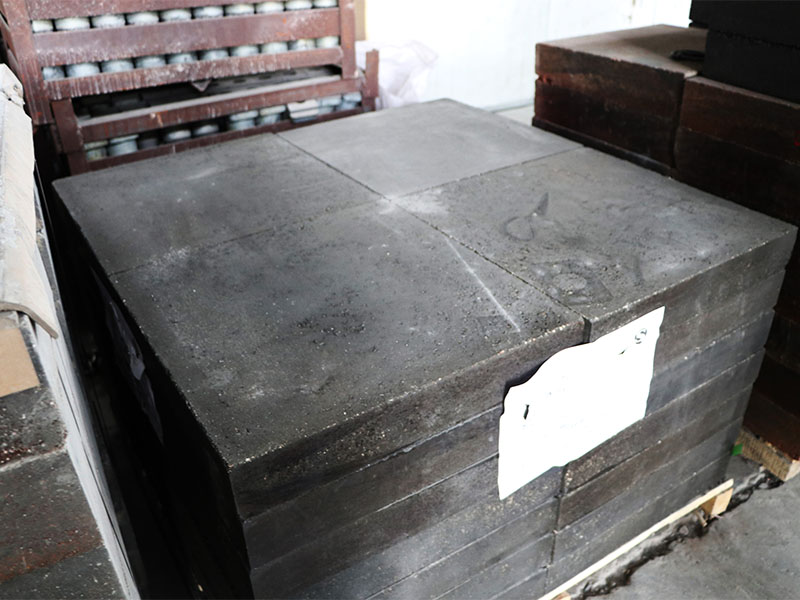
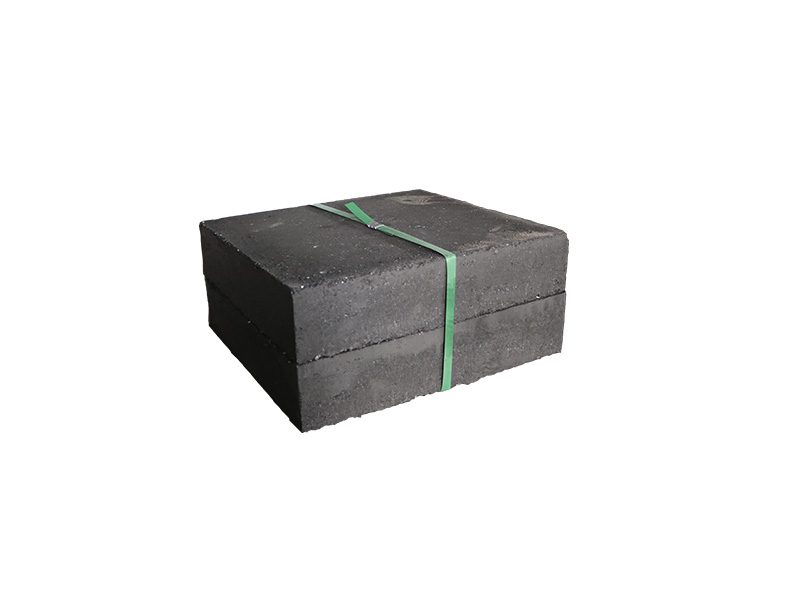
Description
Aluminum magnesium carbon impact plate is a refractory product used in the metallurgical industry, mainly used to withstand the impact and erosion of molten steel. The following is a detailed introduction about it:
Ingredients and characteristics
Main ingredients
- Alumina (Al₂O₃): It has high hardness, high melting point and good chemical stability, which can improve the refractoriness, wear resistance and erosion resistance of the impact plate.
- Magnesium oxide (MgO): It has a high melting point and can improve the high temperature performance of the material, improve slag resistance and thermal shock resistance, and enhance resistance to molten steel and slag.
- Carbon (C): It usually exists in the form of graphite, giving the material good toughness, thermal shock resistance and erosion resistance, while reducing the thermal expansion coefficient of the material and improving its resistance to thermal stress.
Characteristic advantages
- High impact resistance: It can withstand the strong impact of molten steel in the ladle at high temperature, maintain the integrity of the structure, and reduce the damage and peeling caused by impact.
- Good erosion resistance: It has excellent erosion resistance to molten steel and slag, effectively resists chemical erosion and scouring of high-temperature melt, and prolongs its service life.
- High refractoriness: With high refractoriness, it can work stably in high temperature environment above 1500℃, meeting the high temperature requirements in the steelmaking process.
- Strong thermal shock resistance: It is not easy to produce cracks and peeling under the condition of thermal shock of molten steel and rapid temperature change, and has good thermal stability.
Application Scenarios
Tundish
Installed in the impact area at the bottom of the tundish, it is used to buffer the impact force of molten steel in the ladle, protect the bottom and working layer of the tundish, prevent the molten steel from directly scouring the lining of the tundish, increase the service life of the tundish, and ensure the stability of the continuous casting process.
Ladle
Placed in the impact area at the bottom of the ladle, it withstands the strong impact force and erosion when the molten steel is injected, reduces the damage of the refractory material of the ladle, reduces the maintenance frequency and cost of the ladle, and improves the operation rate of the ladle.
Precautions for use
- Installation requirements: During installation, ensure that the impact plate fits tightly with the installation part of the tundish or ladle to avoid gaps, prevent molten steel and slag from penetrating from the gaps, and affect the use effect.
- Baking system: Before use, it is necessary to bake according to the prescribed baking system, slowly heat up, remove moisture, and avoid cracking or damage of the impact plate due to rapid evaporation of moisture.
- Usage process monitoring: During use, pay close attention to the use of the impact plate, such as observing its erosion degree and whether there are cracks through the observation hole, find problems in time and take corresponding measures, such as replacing the impact plate.
- Maintenance and care: Regularly check and maintain the impact plate after use, clean the surface residue and attached steel slag, and repair the impact plate with less damage to extend its service life.